Why the Pledge Is Addressed to Men, and What It Asks
The Pledge starts from a hard sentence: men create the demand, so better men have to end it.
October 13, 2026 · 4 min read
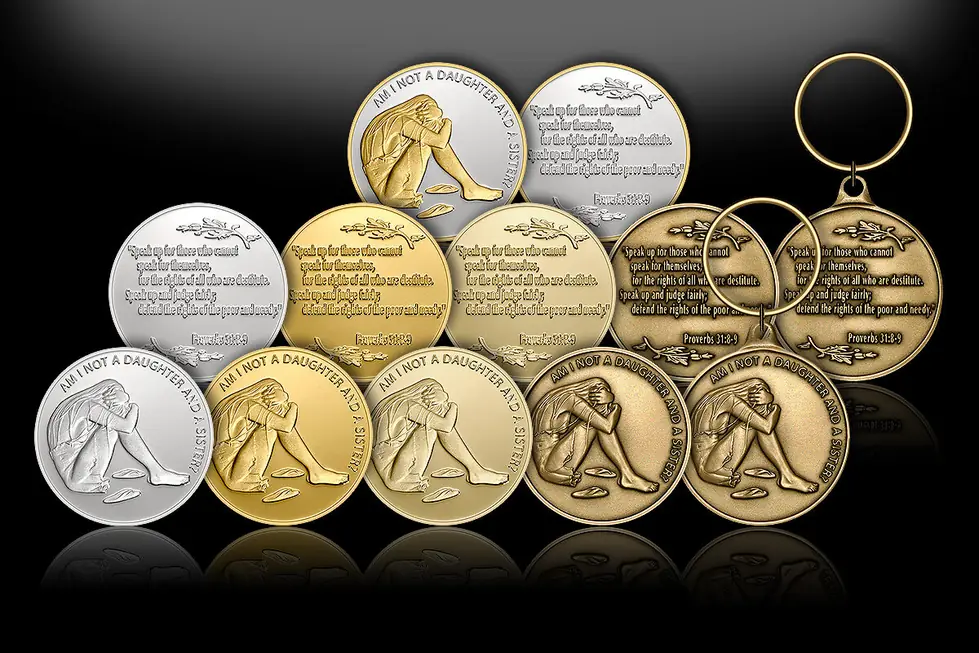
Some people are surprised when they read our Pledge. It does not ask everyone to sign something general. It speaks directly to men. We understand why that might feel pointed, and we want to explain it honestly, because the reason matters more than the wording.
The Pledge opens with these words: “Recognizing that men create demand for prostituted children and that better men have to end the demand.” It continues, “And mindful of my own past failure to protect the innocence of kids by tolerating the existence of the commercial sex industry that makes them vulnerable.” We think that is a remarkable way to begin. It starts with confession, not with accusation.
Why speak to men
King Tribe’s work on human trafficking centers on the child sex trafficking victim. The Pledge looks at the demand side of that wrong. A child cannot be exploited for the sake of a market unless someone is willing to be the market. Naming that plainly is uncomfortable, and it should be. Our own page on awareness says that child victims must be identified and treated as victims, and that the arrest and prosecution of buyers must be made a priority.
It would be easy to speak only about rescuing victims, which is good and necessary, and to say nothing about the person on the other side of the transaction. But if the demand stays the same, the harm keeps finding new children. So the Pledge calls on men to look at their own part and to change it.
This is not a claim that every man is guilty, and it is not a claim that women have no part to play. Women and men both speak, give and pray. The Pledge simply addresses men because it addresses the demand, and it asks them to become what it calls “better men.”
The three commitments
After the opening, the Pledge says: “Today I make the commitment to becoming a better man and my commitment is demonstrated by the following.” Three commitments follow.
- I will not purchase or participate in pornography, prostitution, or any form of the commercial sex industry.
- I will hold my friends accountable for their actions toward women and children.
- I will take immediate action to protect those I love from this destructive market.
The Pledge adds a few concrete notes under each. For the second commitment, it says: no toleration for degrading women, improper jokes or indecent pictures, and then, “Meet with, pray, lead by example, encourage.” For the third, it says: “Become informed, partner with Anti-Human Trafficking organizations, and tell others.” It closes with a sentence we take seriously: “I will defend our daughters with my life of integrity.”
The second commitment is the one people skip
Many of us can imagine making a private promise. The second commitment asks something harder, which is to speak up to our friends. Few things are more awkward than saying to a man you have known for years that a joke was not funny, or that the way he talks about women is not acceptable. But the Pledge asks for exactly that, and it asks us to do it in the way a friend does, by meeting, praying, leading by example and encouraging.
Find a wingman
The letter that welcomes those who take the Pledge, addressed “Dear Defender,” offers some practical advice. One piece is this: “Find a wingman. Real men find strength in numbers, and in numbers they flee destruction.” The writer explains that his own battle would be lonely if he did not have other men who know what tempts him. He has honest and confidential relationships with two men who know the very best and the very worst about him, and they ask him tough questions each week that he needs to answer.
We think the wingman idea is the most useful part of the whole Pledge. Good intentions made alone tend to fade. Good intentions made with a friend who asks you weekly how it is going tend to last. If you are a man reading this, consider who that person could be. If you are a wife, a pastor or a friend, consider how you might encourage the men in your life toward that kind of honesty.
Why we care about this at King Tribe
King Tribe was begun to increase awareness of the individual person who is suffering. The medallion Ken King issued in 2010 asks, Am I not a daughter and a sister? The Pledge is the other half of that question. If the medallion asks us to see the child, the Pledge asks the men among us to change the way we live so that fewer children are in harm’s way. And the line on the back of the medallion, from Proverbs 31:8-9, still holds: speak up for those who cannot speak for themselves.
How to tell us you took it
The simplest way to tell King Tribe you have taken the Pledge is to send an email to ken@kingtribe.com. A short note is enough, and you do not need to give details you would rather keep private.
If you are in the Seattle area and lead a men’s group, a church class or a family gathering, you can also write to talk about reading the Pledge together. Pick a quiet evening, read the three commitments aloud, and let each person say honestly which one is hardest for them. That conversation may be the most valuable part of the whole exercise.
King Tribe, ken@kingtribe.com
Write to KenMore articles
“Am I Not a Man and a Brother?” The Story Behind the Medallion
Some of the oldest campaigns for justice fit in the palm of your hand.
How to Start a Conversation About Human Trafficking With Someone You Know
A hard subject is easier to raise when you have something to hold and a heart that is ready to listen.